Pope Francis will be the first pontiff to address a G7 summit. He's raising the alarm about AI
Jun 14, 2024
Francis will address G7 leaders at their gathering in southern Italy
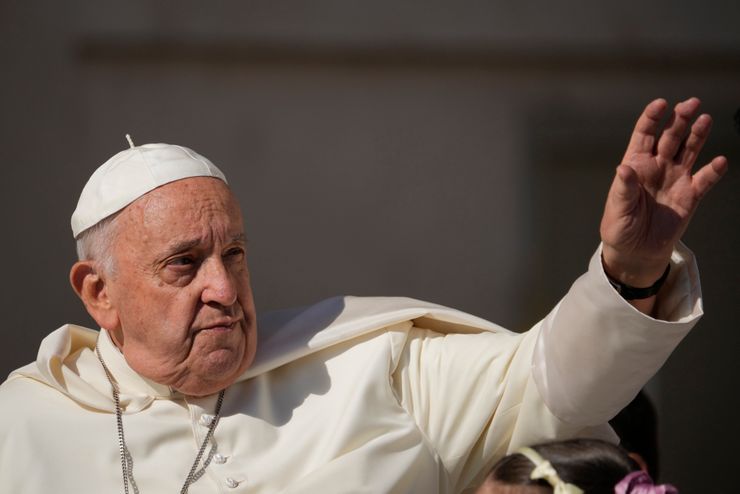
BARI, Italy (AP) — Pope Francis is no stranger to artificial intelligence: a deepfake photo of him in a white puffer jacket went viral last year. But his
concerns about AI go far beyond an unflattering shot
and are now taking center stage at theGroup of Seven summit
.Francis will address G7 leaders on Friday at their annual gathering in southern Italy — a first for a pope. He intends to use the occasion to join the chorus of countries and global bodies pushing for stronger guardrails on AI following the boom in generative artificial intelligence kickstarted by OpenAI’s ChatGPT chatbot.
“Still alive. You too!” Francis quipped to G7 host Italian Premier Giorgia Meloni, who greeted him as his helicopter arrived at the summit venue from the Vatican. “It's going to be a long day,” she told him as they boarded a golf cart to bring Francis to the first of his bilateral meetings before his speech.
The Argentine pope used his annual peace message this year to
call for an international treaty to ensure AI
is developed and used ethically. He argues that a technology lacking human values of compassion, mercy, morality and forgiveness is too perilous to develop unchecked.Meloni
invited Francis and announced his participation, knowing the potential impact of his star power and moral authority on the G7. The pope's presence is expected to underscore broadly shared concerns about AI that touches on Francis’ own priorities about peace and social justice.“The pope is, well, a very special kind of a celebrity,” said John Kirton, a political scientist at the University of Toronto who directs the G7 Research Group thinktank.
Kirton recalled the last summit that had this kind of star power was the 2005 meeting in Gleneagles, Scotland, where members decided to wipe out the $40 billion of the debts owed by 18 of the world’s poorest countries to the World Bank and the International Monetary Fund.
That summit was preceded by a Live8 concert in London that featured Sting, The Who and a reformed Pink Floyd and drew over a million people in a show of solidarity against hunger and poverty in Africa.
“Gleneagles actually hit a home run and for some it’s one of the most successful summits,” Kirton said.
No such popular pressure is being applied to G7 leaders in the
Italian city of Puglia
, but Francis can wield his own moral authority to renew his demands for safeguards for AI and highlight the threats to peace and society it poses.Generative AI technology has dazzled the world with its capabilities to produce humanlike-responses, but it’s also sparked fears about AI safety and led to a jumble of global efforts to rein it in.
Some worry about catastrophic but far off risks to humanity because of its potential for creating new bioweapons and supercharging disinformation. Others fret about its effect on everyday life, through algorithmic bias that results in discrimination or AI systems that eliminate jobs.
In his peace message, Francis echoed those concerns and raised others. He said AI must keep foremost concerns about guaranteeing fundamental human rights, promoting peace and guarding against disinformation, discrimination and distortion.
On the regulation front, Francis will in some ways be preaching to the converted as the G7 members have been at the forefront of the debate on AI oversight.
Japan, which held the G7’s rotating presidency last year, launched its Hiroshima AI process to draw up international guiding principles and a code of conduct for AI developers. Adding to those efforts, Prime Minister Fumio Kishida last month
unveiled a framework for global regulation
of generative AI, which are systems that can quickly churn out new text, images, video, audio in response to prompts and commands.The European Union was one of the first movers with its wide-ranging
AI Act that’s set to take effect over the next two years
and could act as a global model. The act targets any AI product or service offered in the bloc’s 27 nations, with restrictions based on the level of risk they pose.In the United States, President Joe Biden issued an
executive order on AI safeguards
and called for legislation to strengthen it, while some states likeCalifornia
andColorado
have been trying to pass their own AI bills, with mixed results.Antitrust enforcers on
both sides of the Atlantic
have beenscrutinizing big AI companies
including Microsoft, Amazon andOpenAI
over whether their dominant positions stifle competition.Britain kickstarted a global dialogue on reining in AI’s most
extreme dangers with a summit last fall
. At afollowup meeting
in Seoul, companies pledged to develop the technology safely. France is set to host another meeting in the series early next year. The United Nations has also weighed in with itsfirst resolution
on AI.On the sidelines of his AI speech, Francis has a full day of bilateral meetings. He'll see Ukraine President Volodymyr Zelenskyy, as well as invited leaders from Algeria, Brazil, India, Kenya, Turkey. He will also meet with G7 members, including Biden, Canadian Prime Minister Justin Trudeau and French President Emmanuel Macron.
___
Chan reported from London.