Advanced Stainless Steel Wire Mesh Belt Solutions for OEM and Wholesale Industrial Applications
Nov 10, 2026
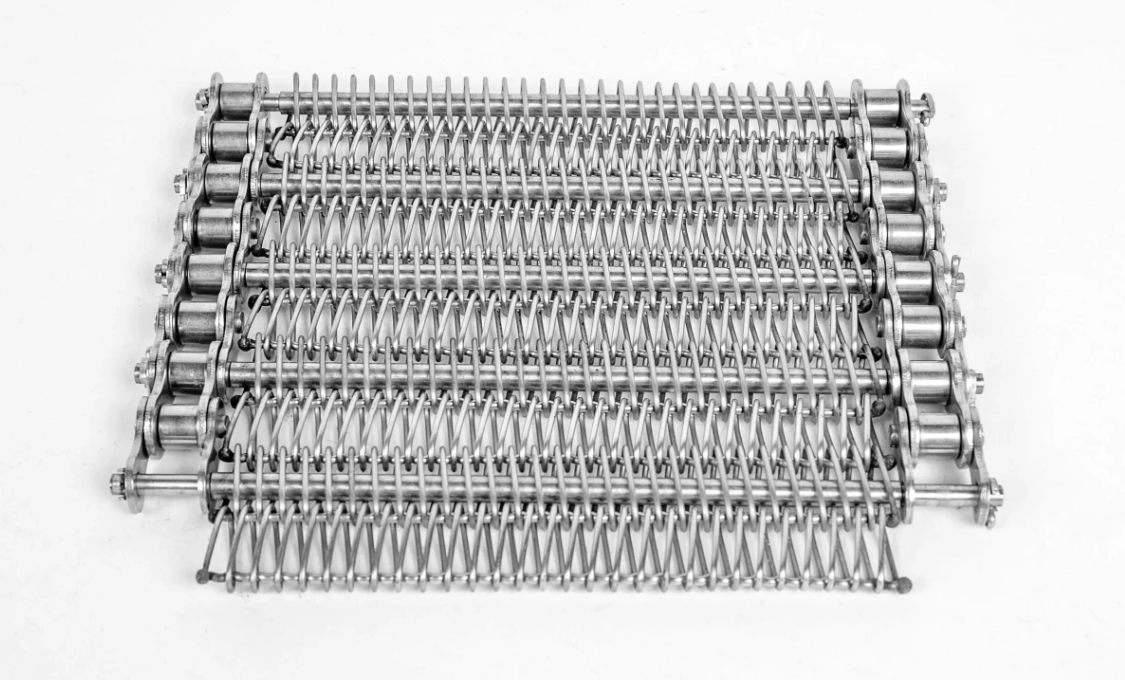
Yangzhou, Jiangsu Nov 10, 2026 (Issuewire.com) - A stainless steel wire mesh belt is an essential component in industrial conveying systems where reliable material transfer, heat resistance, and consistent process performance are required. From powder metallurgy and metal heat treatment to brazing, electronics manufacturing, glass processing, and industrial drying, the right mesh belt helps manufacturers move products through demanding production environments.
However, selecting a stainless steel wire mesh belt involves more than choosing a material. Mesh structure, wire diameter, opening size, belt width, edge construction, operating temperature, and drive configuration can all influence performance. A belt designed for a high-temperature sintering furnace may require a different construction from one used for cleaning, drying, or general material handling.
Advanced Stainless Steel Wire Mesh Belt Solutions for OEM and Wholesale Industrial Applications
What Makes Stainless Steel Wire Mesh Belts Suitable for Industrial Processing?Stainless steel wire mesh belts combine a metal conveying surface with an open structure that allows air, heat, and certain process media to pass through the mesh. Their suitability depends on the stainless steel grade, construction, and operating conditions.
Several characteristics make them useful in industrial production.
Heat resistance: With an appropriately selected alloy and belt construction, stainless steel mesh belts can operate in elevated-temperature environments, including certain heat treatment, brazing, and sintering processes. The maximum suitable temperature depends on the material grade, furnace atmosphere, load, and operating cycle.
Open mesh structure: The openings between wires can support airflow, heat transfer, drainage, and drying. The appropriate opening size depends on the product dimensions and the requirements of the process.
Mechanical strength: Wire diameter, cross-rod dimensions, mesh geometry, and edge design affect load capacity and resistance to deformation. These factors should be evaluated against the actual operating load and conveying conditions.
Process versatility: Different belt structures can accommodate a range of products, from small industrial components to larger materials requiring a more robust conveying surface.
Maintenance potential: A correctly specified belt, combined with suitable tracking, tensioning, and routine inspection, can help support stable operation. Actual service life depends on working conditions and maintenance practices.
These characteristics make stainless steel wire mesh belts a practical option for many continuous production lines, but the design must match the process rather than rely on a generic specification.
Key Industrial Applications of Stainless Steel Wire Mesh Belts
The same product category can serve different purposes across manufacturing industries. Understanding the application is the first step toward selecting a suitable belt.
Powder Metallurgy and Sintering
In powder metallurgy, components may pass through a furnace for sintering and related thermal processes. The conveyor belt must support the workpieces while tolerating the temperature, furnace atmosphere, and continuous operating cycle.
Important considerations include alloy selection, mesh stability, product loading, belt tension, and resistance to thermal deformation. For demanding furnace applications, the belt structure and material should be evaluated together with the furnace design.
A suitable sintering furnace belt can help maintain consistent material movement through the heating zone and support the production process.
Heat Treatment and Brazing
Heat treatment lines may involve annealing, tempering, hardening, and other controlled heating processes. Brazing applications require a belt that transports components through a heating zone while accommodating the thermal and mechanical conditions of the process.
Material grade should be selected according to actual operating temperature and furnace atmosphere. Belt width, mesh opening, load distribution, and drive design also affect conveying stability.
For these applications, discussing the full operating profile with the manufacturer is more useful than selecting a belt based on temperature alone.
Electronics Manufacturing
Electronic components and related parts may require controlled conveying during heating, drying, or other production stages. The mesh structure must suit the dimensions, weight, and handling sensitivity of the products.
A belt with inappropriate openings may allow small parts to shift or fall through, while an unsuitable surface may fail to provide the required support. Engineers should therefore evaluate product size, loading arrangement, process temperature, and line speed before confirming the design.
Glass and Building Materials
Glass-related production and building-material processing can expose conveyor belts to heat, abrasive conditions, or repeated thermal cycles, depending on the specific process.
The belt material and construction should be chosen to suit the temperature profile, product weight, contact conditions, and expected service environment. A design intended for a moderate-temperature drying line should not automatically be treated as suitable for a high-temperature furnace.
Cleaning, Drying, and Chemical Fiber Processing
Open mesh construction can be useful when products need exposure to hot air, drainage, or process fluids. In cleaning and drying equipment, the belt should support the product while allowing the process medium to move through the conveying surface.
Chemical fiber and catalyst-related applications may introduce additional requirements concerning temperature, chemical exposure, particle retention, and product stability.
Clearly defining these requirements helps the manufacturer determine whether a standard construction is suitable or a customized design is needed.
How to Select the Right Stainless Steel Wire Mesh Belt
A well-matched belt begins with accurate application information. The following factors should be reviewed before requesting a quotation.
1. Confirm the Operating Temperature and Environment
Identify the normal operating temperature, peak temperature, heating and cooling cycles, and furnace atmosphere. Also disclose any exposure to corrosive substances, cleaning agents, or other process chemicals.
Different stainless steel grades have different temperature and corrosion-resistance characteristics. There is no single grade that is ideal for every application.
The material should be selected according to the complete operating environment rather than the maximum temperature in isolation.
2. Choose the Appropriate Mesh Structure
Mesh construction affects product support, airflow, opening size, flexibility, and mechanical performance.
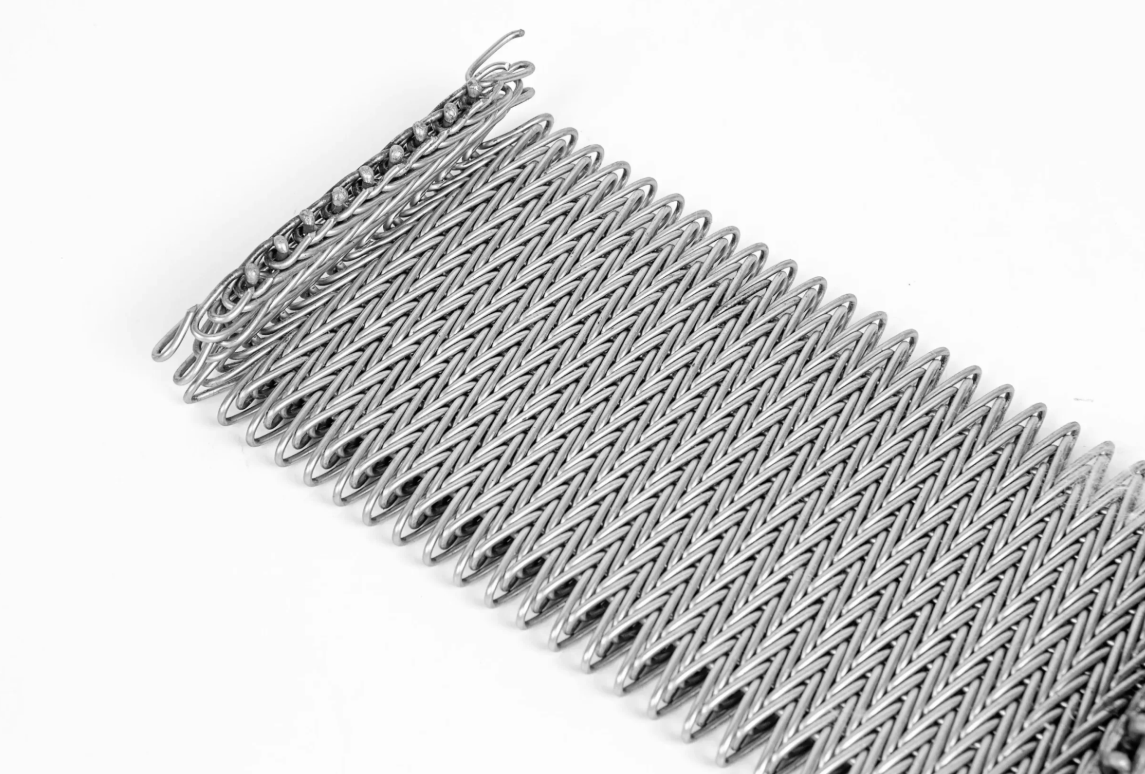
Depending on the production line, buyers may consider sintering furnace belts, brazing conveyor belts, heat treatment mesh belts, flat wire belts, or flat flex belts.
The appropriate design depends on the product being conveyed and the equipment configuration. Buyers should share drawings, photographs, or an existing belt sample when available.
3. Specify Wire Diameter and Mesh Opening
Wire diameter influences the belt's mechanical characteristics, while mesh opening affects product support and the passage of air or process media.
A larger opening may improve airflow but may not be suitable for small components. A denser mesh may provide better support for certain products but can change the belt's flexibility and process performance.
These dimensions should be considered together with product size, loading weight, and required conveying speed.
4. Evaluate Belt Width, Length, and Edge Design
Belt dimensions must match the conveyor system. Buyers should confirm the required width, overall length, connection method, edge construction, and drive arrangement.
An unsuitable edge design or poor alignment with the conveyor can contribute to tracking problems and uneven wear. The manufacturer should understand the equipment layout before recommending a final specification.
5. Consider Maintenance and Replacement Requirements
Routine inspection can help identify wire damage, abnormal wear, deformation, tracking deviations, and connection problems before they cause major interruptions.
Advanced Stainless Steel Wire Mesh Belt Solutions for OEM and Wholesale Industrial Applications
Custom Stainless Steel Wire Mesh Belts for Specific Production Needs
Standard products may be suitable for established conveying systems, but specialized industrial processes can require a more tailored configuration.
Custom stainless steel wire mesh belts can be specified around the production line's working conditions, dimensions, and conveying requirements. Before starting a custom order, buyers should prepare the following information:
Application: Sintering, brazing, heat treatment, drying, cleaning, or another process.
Operating conditions: Normal and peak temperatures, furnace atmosphere, and relevant chemical exposure.
Dimensions: Required belt width, length, mesh opening, and wire diameter, where known.
Product information: Workpiece size, weight, shape, and loading arrangement.
Conveyor configuration: Drive method, edge requirements, connection details, and equipment drawings.
Order requirements: Quantity, delivery destination, inspection expectations, and spare-parts needs.
Providing this information at the quotation stage helps the manufacturer assess the application and identify the most relevant construction options.
For OEM equipment manufacturers, customized belt dimensions and compatible construction details can also help align the conveying component with the wider machine design. Final specifications should be confirmed through technical review before production.
What to Look for in a Stainless Steel Wire Mesh Belt Manufacturer
Choosing a supplier involves evaluating manufacturing capability and the level of support available throughout the product lifecycle.
Manufacturing equipment and process control: Production equipment, dimensional control, and consistent manufacturing procedures can affect product quality. Buyers should ask how the supplier controls critical dimensions and verifies finished belts.
Technical experience: A supplier familiar with high-temperature metal conveyor belts may be better positioned to discuss furnace conditions, mesh construction, tracking, and maintenance requirements relevant to the application.
Quality management: Review the supplier's quality-management documentation and verify the scope and validity of any certifications that matter to your purchasing requirements. An ISO 9001 certificate, for example, should be checked against the issuing certification body and its stated scope.
Installation and after-sales support: Installation guidance, troubleshooting assistance, maintenance advice, and compatible spare parts can help buyers manage the belt after delivery.
Export and communication capability: For international procurement, confirm technical communication, packaging requirements, shipping arrangements, documentation, and the process for handling questions after installation.
A reliable supplier should be able to discuss the actual application, explain the basis for its recommendations, and clarify which product specifications can be confirmed before an order is placed.
Why Work with Yangzhou Jiaoyang Mesh Belt Manufacturing Co., Ltd.?
Yangzhou Jiaoyang Mesh Belt Manufacturing Co., Ltd. has long been engaged in the manufacturing of high-temperature metal wire belts. The company integrates research and development, production, sales, installation, recycling, and after-sales services, serving customers who require conveying solutions for demanding industrial processes.
Its product range includes sintering furnace belts, brazing conveyor belts, heat treatment mesh belts, pyrolysis furnace mesh belts, flat wire belts, and flat flex belts. These products support applications in powder metallurgy, electronics, building materials and glass, heat treatment, chemical fibers, catalyst processing, cleaning, and drying.
The company reports that its manufacturing facilities include more than 30 fully automatic wire winding machines, CNC straightening machines, and intelligent embossing machines. Its factory covers approximately 30 acres and includes a modern production workshop staffed by 60 skilled operators.
Yangzhou Jiaoyang also reports high-tech enterprise recognition and ISO 9001 management-system certification. International customers in Southeast Asia, Europe, and other markets form part of its export business.
Beyond manufacturing, the company emphasizes installation guidance, responsive technical support, maintenance recommendations, and the supply of compatible spare parts and accessories. This service approach is intended to help customers address operating issues and maintain the performance of their conveying systems over time.
For buyers sourcing a stainless steel wire mesh belt, sharing the production process, operating conditions, and equipment requirements with Yangzhou Jiaoyang can provide a practical starting point for discussing a suitable product configuration.
Frequently Asked Questions About Stainless Steel Wire Mesh Belt
What is a stainless steel wire mesh belt used for?
A stainless steel wire mesh belt transports materials through industrial processes that may involve heating, drying, cleaning, cooling, or other controlled operations. Common applications include powder metallurgy, heat treatment, brazing, electronics manufacturing, glass processing, and chemical fiber production. The suitable design depends on the specific process and operating environment.
How do I choose a stainless steel wire mesh belt for high-temperature applications?
Start by confirming the operating temperature, furnace atmosphere, thermal cycles, product load, and conveying speed. Then evaluate the stainless steel grade, mesh structure, wire dimensions, edge construction, and drive arrangement. High-temperature suitability should be confirmed for the complete application rather than inferred from the material name alone.
Can stainless steel wire mesh belts be customized?
Yes, many industrial wire mesh belts can be customized according to dimensions, mesh construction, material requirements, edge design, and equipment configuration. Available options depend on the manufacturer and application. Providing drawings, operating parameters, and product details helps the supplier assess a suitable design.
What information should I provide when requesting a quotation?
Provide the intended application, working temperature, belt width and length, product size and weight, mesh requirements, conveyor drive configuration, quantity, and delivery destination. If some technical details are unavailable, an equipment drawing, existing belt sample, or clear photographs can help the manufacturer understand the requirements.
How can I extend the service life of a stainless steel wire mesh belt?
Use a belt suited to the operating environment, follow the equipment manufacturer's installation and tensioning recommendations, and inspect tracking, edges, connections, and wire condition regularly. Avoid overloading the belt or exposing it to conditions beyond its specified limits. Maintenance frequency should reflect the actual duty cycle and operating environment.
Request a Custom Stainless Steel Wire Mesh Belt Solution
The right stainless steel wire mesh belt should match the production process, not just the equipment's basic dimensions. Material selection, mesh design, belt geometry, and after-sales support all contribute to a suitable long-term solution.
Yangzhou Jiaoyang Mesh Belt Manufacturing Co., Ltd. provides a range of industrial metal wire belts and related technical services for customers across multiple manufacturing sectors.
If you are sourcing a stainless steel wire mesh belt for a new production line or replacing an existing belt, prepare your application details and equipment specifications for a technical discussion. Contact Yangzhou Jiaoyang to explore suitable belt options, customization requirements, and service support for your project.
For more information, please visit: https://www.jymeshbelt.com/
Source :Yangzhou Jiaoyang Mesh Belt Manufacturing Co., Ltd.
This article was originally published by IssueWire. Read the original article here.
More News




YOUR NEWS, OUR NETWORK.
Do you have Great News you want to tell the world?
Be it updates about your business or your community, you can make sure that it’s heard by submitting your story to our network reaching hundreds of news sites across 6 verticals.