Intelligence Leads, Standards Empower: A Comprehensive Review of CEIC 2026
Oct 27, 2026
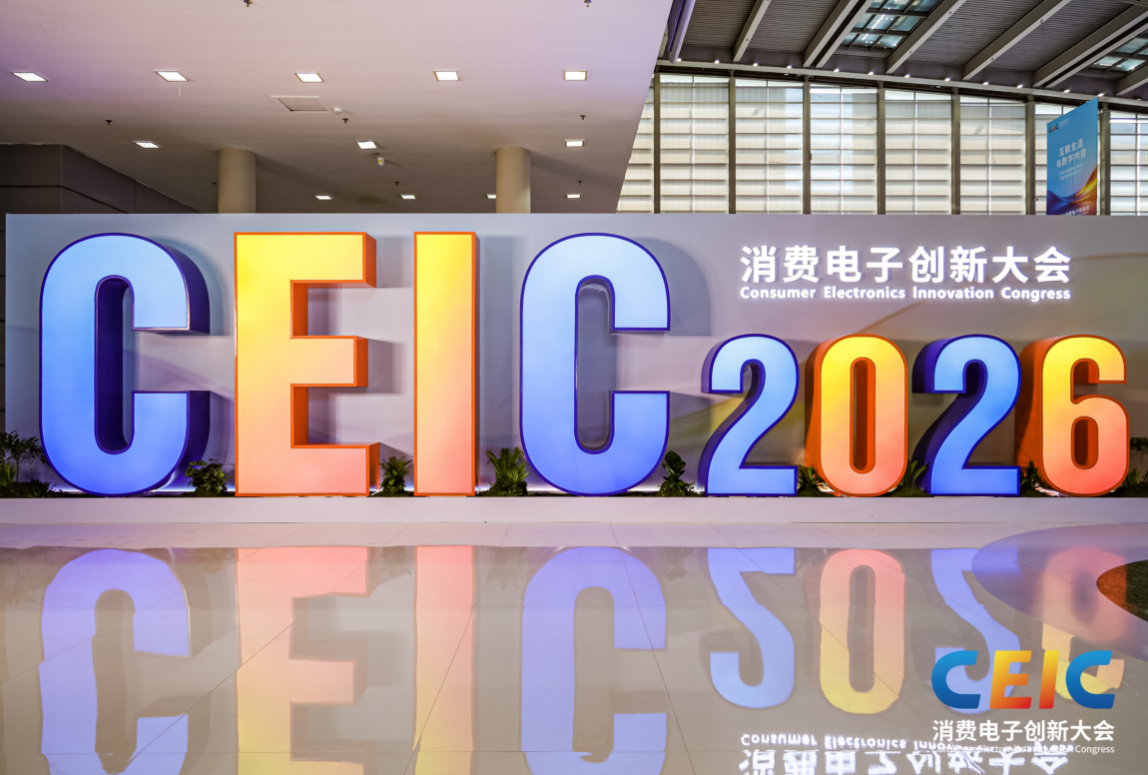
Shenzhen, Guangdong Oct 26, 2026 (Issuewire.com) - The Consumer Electronics Innovation Congress 2026 (CEIC 2026) was held at the Shenzhen Convention and Exhibition Center (Futian) from October 22 to 24. Rooted in the Greater Bay Area and reaching out to the world, the event brought together industry representatives from 78 countries and regions, establishing an important platform for global exchange and cooperation in the consumer electronics industry in the era of AI agents. The congress highlighted China's innovation capabilities and its commitment to international collaboration.
CEIC 2026 featured an extensive program comprising three main forums, more than 20 sub-forums, and a 20,000-square-meter exhibition. More than 300 companies participated as exhibitors, while cumulative attendance across the congress and exhibition reached 53,900 visits over three days. More than 20,000 visits were recorded on the opening day alone.
More than 30 academicians and experts, along with over 300 global industry leaders, technology specialists, and investment representatives, gathered in Shenzhen for high-level discussions on technological innovation, evolving user experiences, and industrial transformation in the era of AI agents. The exchanges helped build broad consensus on the future direction of the industry.
Three Main Forums Highlighted the Industry's Shift Toward Intelligent Evolution
The three main forums focused on technological innovation, industrial development, and AI innovation in the Guangdong-Hong Kong-Macao Greater Bay Area, highlighting the industry's transition toward intelligent evolution.
The congress featured the release of several major industry reports, including Top 10 Trends in Consumer Electronics and Top 10 Global Computing Power Trends 2027, providing insights into emerging technologies and future industry development.
Eight industry organizations jointly launched the (PI)² Physical Intelligence Partnership Initiative, aimed at promoting deeper integration between physical intelligence and consumer electronics.
At the Industrial Development Forum, several international organizations signed memoranda of understanding, while the results of the NIDA Pioneer Program were unveiled. Participating companies also presented practical applications of emerging technologies in areas such as AI-powered vehicles and intelligent spaces.
More Than 20 Sub-Forums Explored Emerging Technologies and Industry Applications
More than 20 sub-forums covered a wide range of emerging fields, including SparkLink and the HarmonyOS ecosystem, wireless local area networks (WLAN), Network 2030, embodied intelligence, digital health, AI-powered ultra-high-definition technologies, 3D spatial imaging, and the low-altitude economy.
On the opening day, the national finals of the 3rd SparkLink-HarmonyOS Cup Innovation Application Challenge were held alongside the congress, providing a platform for developers and innovation teams to compete, exchange ideas, and showcase their capabilities.
A series of major technical and standardization achievements were released, including the SparkLink 3.0 standard, 15 recommended national standards, the Blue Paper on the Evolution of SparkLink SLE 3.0 Technical Standards, and the Blue Paper on Technical Requirements for SparkLink Short-Range Communication and Embodied Intelligence.
The Vivid Immersive Park, built around the Vivid audiovisual technology ecosystem and presented through traditional Chinese music, showcased an end-to-end application framework covering standards, content capture, production, encoding, transmission, decoding, rendering, and playback. The immersive demonstrations illustrated how audiovisual standards and technologies could be integrated across the entire industry chain.
The congress also introduced an innovative Open Stage, featuring interactive programs including the Chasing Light Roundtable, Venture Capital Matchmaking, and hands-on Codelabs sessions for developers.
These activities facilitated exchanges of industry perspectives and connections between innovative projects and investment resources.
Twelve hard-tech projects participated in roadshows and matchmaking sessions with investment institutions. Innovative products and technologies, including edge AI computing terminals, exoskeleton robots, and AI-powered smart rings, were presented during on-site demonstrations, highlighting entrepreneurial activity and technological innovation in the consumer electronics industry.
Exhibition Showcased Innovation Across the Consumer Electronics Value Chain
The exhibition covered the entire consumer electronics value chain, from chips, operating systems, and advanced materials to terminal products and application services.
Several international standards organizations and industry alliances released key annual achievements, while numerous emerging technologies and new products made their debut.
AllianceHub, an IT collaboration platform designed specifically for international standards organizations and industry alliances, was officially launched. The platform enables organizations to manage core operations through integrated, one-stop online collaboration.
HiSilicon Technologies showcased a distributed collective intelligence solution integrating OpenHarmony and SparkLink technologies.
More than 30 SparkLink ecosystem partners presented hundreds of exhibits, ranging from the debut of 2.0-series chips to comprehensive demonstrations of ecosystem solutions.
Six major exhibition categories, including positioning and navigation, embodied intelligence, and all-optical networking, demonstrated the latest achievements in foundational technology innovation.
The Global Intelligent IoT Consortium (GIIC) presented a dedicated HarmonyOS ecosystem exhibition area featuring a range of industry-oriented IoT + HarmonyOS solutions, including Hualong Xunda's AI-powered embodied intelligence flexible demonstration production line.
Meanwhile, the OneConnect smart home exhibition area focused on seamless connectivity and interoperability among devices from different brands, attracting interest from industry partners.
China Media Group showcased CCTV Audio-Visual Large Model 3.0, while Zhijuxinlian presented innovative technologies such as glasses-free 3D displays, illustrating the growing convergence of audiovisual and intelligent technologies.
Smart vehicles from NIO, XPeng, and GAC were exhibited alongside low-altitude passenger aircraft from EHang and Zero Gravity.
Consumer-oriented innovations, including humanoid robots, exoskeleton robots, AI PCs, and AI-powered sports glasses, were also displayed, allowing visitors to experience how intelligent technologies are reshaping everyday life.
The World WLAN Application Alliance (WAA) presented high-quality WLAN experiences through three immersive scenarios: smart homes, intelligent healthcare and elderly care, and smart airports.
The Global Computing Consortium (GCC) showcased AI solutions for industries including the electric power sector.
HarmonyOS and SparkLink technologies continued to expand beyond consumer applications into industrial security, mining, electric power, government services, conference management, and offline retail.
Practical applications such as smart safety helmets, intelligent electronic nameplates, and AI-powered self-service retail terminals demonstrated how the consumer electronics industry is evolving from product iteration toward intelligent evolution.
These developments are creating new momentum for digital transformation across a wide range of industries.
Advancing Global Consumer Electronics Innovation Through Foundational Technologies
With its foundation in the Guangdong-Hong Kong-Macao Greater Bay Area and a global outlook, CEIC 2026 brought together international innovation resources and industry stakeholders, using foundational technology innovation as a driving force.
By connecting technological breakthroughs, standards development, industrial applications, and international cooperation, the congress injected fresh momentum into the global consumer electronics industry and highlighted the expanding role of intelligent technologies in shaping its future.
Co-organizers
The Consumer Electronics Innovation Congress 2026 (CEIC 2026) was jointly organized by the following eight organizations:
International SparkLink Alliance (iSLA)
Global Intelligent IoT Consortium (GIIC)
World WLAN Application Alliance (WAA)
Global Computing Consortium (GCC)
Network Innovation and Development Alliance (NIDA)
Comentropy Industry and Standards Innovation Service Center (Comentropy)
Center for International Economic and Technological Cooperation, Ministry of Industry and Information Technology (CIETC)
Source :Syc-inno
This article was originally published by IssueWire. Read the original article here.
More News





YOUR NEWS, OUR NETWORK.
Do you have Great News you want to tell the world?
Be it updates about your business or your community, you can make sure that it’s heard by submitting your story to our network reaching hundreds of news sites across 6 verticals.